
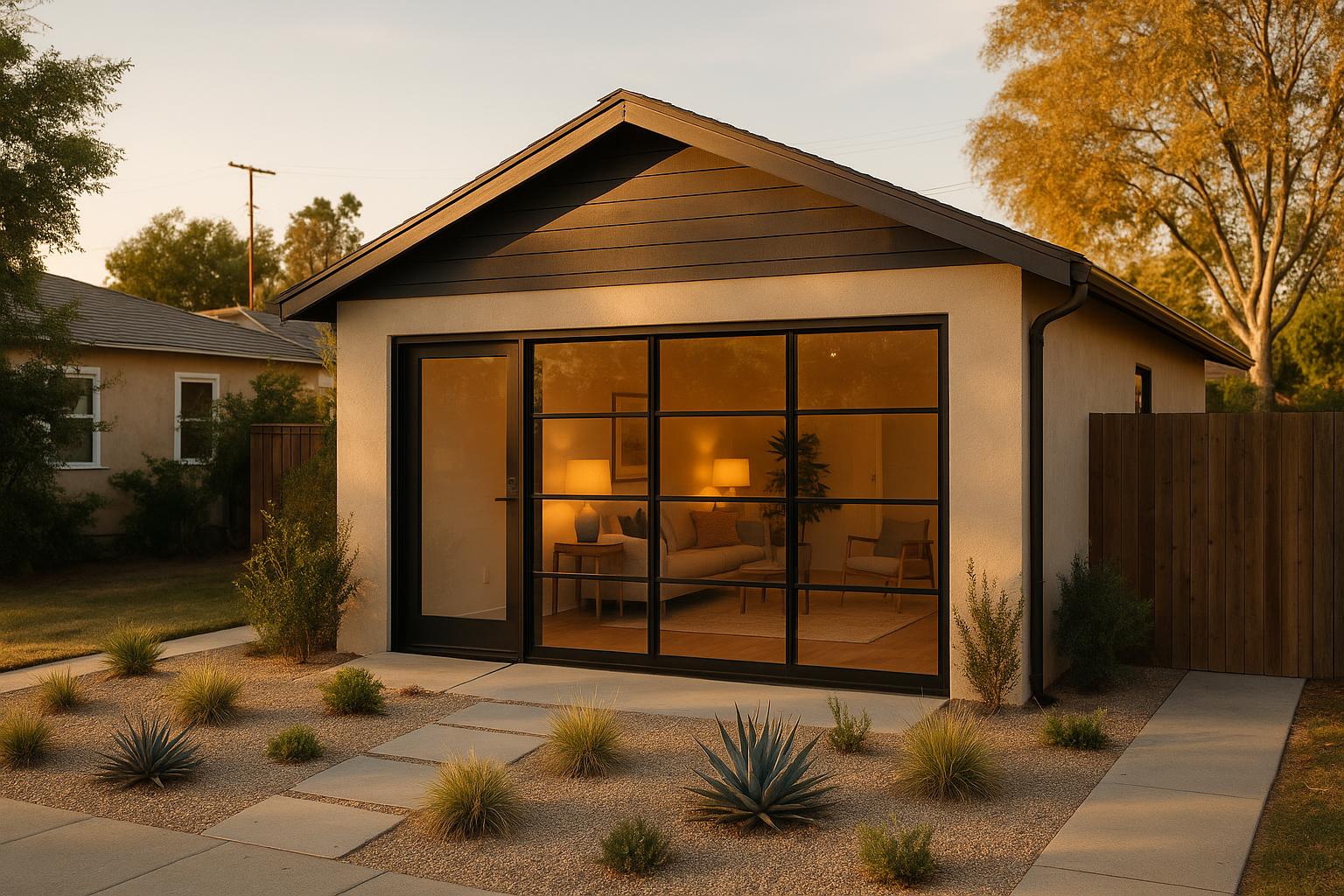
Why So Many San Diego Homeowners Are Converting Their Garages
San Diego's housing market isn't getting any cheaper, and homeowners are looking for creative ways to add livable square footage without buying a new property. A garage conversion is one of the most popular and cost-effective ways to do it. Whether you need a home office, a rental unit, a guest suite, or a private space for an aging parent, your underused garage might be the answer.
But before you start clearing out the storage bins and holiday decorations, the first question on most people's minds is: how much is this actually going to cost?
The answer depends on several factors, and the range can be wide. Let's break it all down so you can plan your garage conversion with confidence.
Average Garage Conversion Costs in San Diego
Nationally, garage conversions typically run between $20,000 and $80,000. In San Diego, you should expect costs to land on the higher end of that range due to local labor rates, permit requirements, and California's building codes.
Here's a general breakdown:
- Basic conversion (single-car garage): $25,000–$50,000. This covers insulation, drywall, flooring, electrical upgrades, lighting, and basic climate control.
- Mid-range conversion (two-car garage): $50,000–$80,000. This typically includes everything above plus a bathroom, improved HVAC, upgraded finishes, and more complex electrical or plumbing work.
- High-end or ADU conversion: $80,000–$150,000+. If you're converting your garage into a fully permitted accessory dwelling unit with a kitchen, bathroom, separate entrance, and premium finishes, costs rise accordingly.
These numbers can shift based on the current condition of your garage, the scope of the project, and the design choices you make along the way.
What Factors Affect the Price?
No two garage conversions are the same. Here are the biggest variables that determine where your project falls on the cost spectrum.
1. Permits and Code Compliance
San Diego has specific building codes and zoning requirements for garage conversions, especially if you're creating an ADU. Permit fees alone can range from a few hundred to several thousand dollars. You'll also need to meet Title 24 energy efficiency standards, which may require upgraded insulation, windows, and HVAC systems. Skipping permits might seem tempting, but unpermitted work can lead to fines, complications when selling your home, and safety risks.
2. Foundation and Structural Work
Most garage floors are slightly sloped for drainage and may sit lower than the rest of the house. Leveling the floor, raising it to meet the home's interior, or reinforcing the foundation adds cost. If your garage has structural issues or needs a new subfloor, budget an extra $3,000–$10,000.
3. Plumbing
Adding a bathroom or kitchenette means running new plumbing lines, which is one of the more expensive elements of a conversion. A basic half-bath addition might add $5,000–$10,000, while a full bathroom or kitchen plumbing setup could run $10,000–$20,000 depending on how far the new fixtures are from existing lines.
4. Electrical Upgrades
Garages typically have minimal electrical service—maybe a couple of outlets and an overhead light. Converting to livable space requires bringing the electrical up to code with additional circuits, outlets, lighting, and potentially upgrading your main electrical panel. Expect $3,000–$8,000 for electrical work.
5. Insulation, Drywall, and Climate Control
Garages aren't built for comfort. Walls and ceilings usually lack insulation, and the garage door opening needs to be properly sealed and framed. Insulation, drywall, and a mini-split HVAC system typically cost between $5,000 and $15,000 combined.
6. Finishes and Design Choices
This is where your personal style and budget preferences come into play. Laminate flooring is far cheaper than hardwood. Stock cabinets cost less than custom. The finishes you choose for flooring, lighting, paint, fixtures, and trim can easily swing your total by $5,000–$20,000 or more.
Do You Need to Replace Your Parking?
One concern many San Diego homeowners have is parking. Some neighborhoods and zoning areas previously required replacement parking if you converted your garage. However, recent California legislation—including AB 68 and SB 13—has relaxed parking requirements for ADU and garage conversions in many cases, particularly if your property is near public transit.
That said, it's still wise to check with the City of San Diego's Development Services Department or work with a contractor who understands local regulations. In areas like La Mesa, Chula Vista, and El Cajon, specific municipal rules may also apply.
Garage Conversion vs. ADU: What's the Difference?
People often use these terms interchangeably, but there's an important distinction:
- A garage conversion transforms your garage into additional living space that's part of your main home—like a bedroom, office, or den.
- A garage ADU conversion creates a fully independent dwelling unit with its own entrance, kitchen, bathroom, and living area. It can be rented out or used as a self-contained living space.
ADU conversions cost more because they require full kitchens, separate utility connections, and must meet more stringent building codes. However, they also offer significantly more value—both in terms of rental income potential and property value increases.
How to Get the Most Value From Your Conversion
Whether you're converting your garage for personal use or as an investment, here are a few tips to maximize your return:
- Get a proper assessment first. Have a professional evaluate your garage's structure, electrical, and plumbing before you set a budget. Surprises are expensive.
- Invest in insulation and climate control. San Diego's weather is mild, but a poorly insulated conversion will feel like a garage no matter how nice the finishes are.
- Don't skip the permits. Permitted work adds to your home's appraised value. Unpermitted work can reduce it—or kill a sale entirely.
- Think about natural light. Replacing the garage door with a proper wall, windows, or even a sliding glass door transforms the feel of the space dramatically.
- Plan for the long term. If there's any chance you'll want to rent the space out someday, consider building it as an ADU from the start. Retrofitting later costs more.
Is a Garage Conversion Worth It in San Diego?
For most homeowners, the answer is yes. A well-executed garage conversion can add 200–500 square feet of livable space to your home at a fraction of the cost of a traditional addition. In San Diego's competitive real estate market, that added square footage—especially if it's a permitted ADU—can significantly boost your property's value.
Whether you're in Encinitas looking to build a rental unit, in Carlsbad wanting a home studio, or anywhere across San Diego County hoping to finally put that garage to better use, a conversion is one of the smartest remodeling investments you can make.
At Blue Sky ADU, we help San Diego homeowners navigate every step of the garage conversion process—from initial design and permits to construction and final walkthrough. If you're ready to explore what's possible with your space, reach out to our team for a free consultation.